

December 19, 2025
Case STudy
Use Case – Bridging the gap between theory and practice with Northumbria University
Overview Hands-on experience enhances learning outcomes and is an integral part of creating confident and competent nurses. Nursing programs therefore provide learners with practical learning experiences at sites relevant to their future careers, allowing them to put their knowledge into practice. Northumbria University is a research-intensive institution with a global reputation for academic excellence. The…
Overview
Hands-on experience enhances learning outcomes and is an integral part of creating confident and competent nurses. Nursing programs therefore provide learners with practical learning experiences at sites relevant to their future careers, allowing them to put their knowledge into practice.
Northumbria University is a research-intensive institution with a global reputation for academic excellence. The Health and Life Sciences department hosts campuses in the heart of Newcastle, the surrounding area, and distance campuses in Amsterdam and London. The Nursing, Midwifery and Health program
– a part of the Health and Life Sciences department – is well-established with a long record of delivering high-quality education, and the faculty is one of the largest in the United Kingdom.
The Problem
One of the greatest challenges faced by educational institutions today is ensuring
that learners are prepared for practice. To do this, they must be equipped with the tools
to succeed. Nurse educators, understanding the value of experiential learning to bridging the gap between theory and practice, seek to maximise opportunities for learners to apply their knowledge.
Barbara Davies, Director of Education and Senior Lecturer in Children’s Nursing at the University of Northumbria, saw the benefit of additional practical learning to streamline the transition of second-year nursing students into their third year.
Led by Barbara, the team devised an intensive simulation program to provide essential hands-on experience and improve learner outcomes. But with over 500 students to onboard in just one week, they faced a daunting challenge.
The Solution
The Northumbria University team developed a four-week simulated practice learning experience for second-year students across the four fields of nursing. While the initial aim was not to manage placement capacity, through consultation the program made it possible to address some issues surrounding peaks in placement activity.
The comprehensive plan combined Oxford Medical Simulation (OMS) virtual simulation, traditional simulation, and hands-on learning opportunities. Planning a gradual release of new opportunities, students would participate in blended learning each week, thematically linked with the appropriate OMS scenarios.
In getting to this solution, the team started with their learning objectives and worked with the OMS team to understand how the selection of virtual scenarios—across adult, paediatric, mental health, and Learning Disability areas—could help match those objectives.
The team then created a custom VR curriculum of five to eight OMS scenarios aligned
with the weekly theme such as cardiac and respiratory. They paired the virtual simulation with comprehensive blended learning, such as reviewing anatomy and physiology related to the system or theme.
New scenarios were released each week, ensuring learners remained aligned and engaged while providing various experiences and maximising learning opportunities across specialities.
Finally, educators created a supplemental ‘Day of Clinical Skills’, which repeated those skills from years one and two of their program, aligned to the selected scenarios.
But the faculty didn’t stop there: they also built in additional sessions to adequately prepare students for the third year of their program. As Barbara shares:
We’ve got a whole suite of other programmes happening as well, including the opportunity to participate in dissection, dissertation planning, critical writing sessions, major incident sessions, and suturing workshops. There are lots of different things going on that the students can actually move on to for additional learning. It’s not just a tick-box exercise—this is about their development, their learning.
The faculty aims to fully prepare students for the next phase of their nursing program, from comprehensive clinical simulation to on-demand access to virtual simulation and enhanced extracurricular learning.
The Rollout
For a successful simulation program, comprehensive onboarding is vital—and Northumbria needed to onboard over 500 learners in one week.
The faculty therefore hosted a week-long kick-off explicitly designed to meet the university’s success metrics and the learners’ needs. The OMS Educational Specialists and Success Team supported the onboarding efforts, joining the faculty at Northumbria to streamline the process.
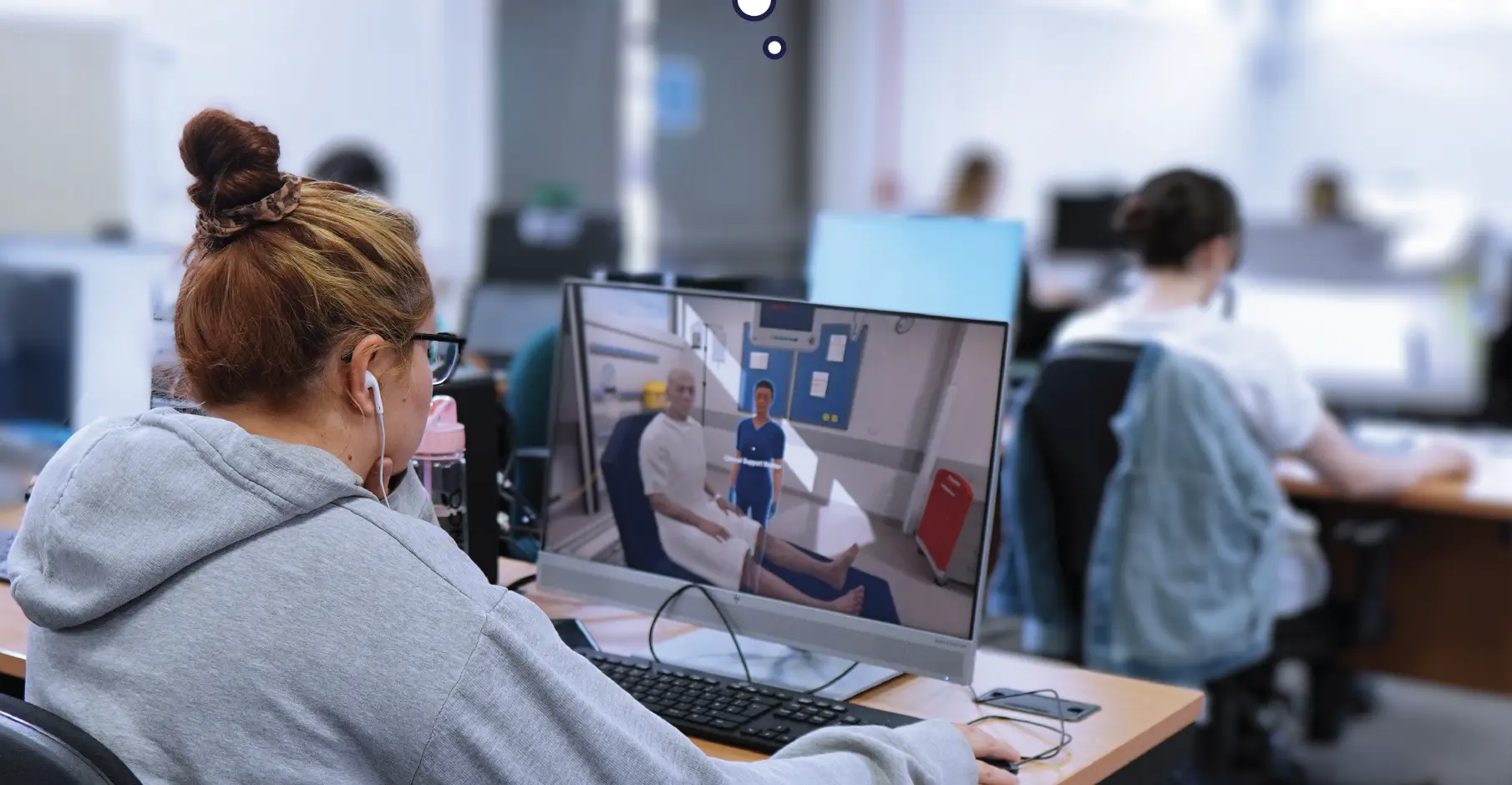
Dividing students into smaller daily cohorts, the OMS team supported the learners’ orientation to VR simulation including setting up their personal devices and ensuring all learners successfully logged in on day one, laying the foundation for learning success from the very start.
The Outcomes
The thoughtful onboarding plan proved very successful. From paediatrics to geriatrics, from sepsis to respiratory distress, learners were exposed to multiple patients, specialities and diagnoses in a short space of time—all without needing to set foot in the hospital.
When surveyed, 93% of students said they liked or strongly liked their OMS sessions. Student Antonia Reid shared her thoughts after completing her final day of OMS simulation.
This success was replicated at scale. By the end of the first week, learners had completed an incredible 3,000 simulation sessions and at the end of four weeks this had reached 12,800 sessions across 31 different clinical cases. That’s over 380 days of simulation – or 71 scenarios per hour – all in under a month!
And so, in collaboration with the OMS team, the Northumbria faculty successfully delivered a simulated practice learning experience using OMS virtual simulation.
Key Learnings
Begin with communication
While developing their simulated practice learning experience, Northumbria University consulted with their partners, practice placement facilitators, and clinical staff to ensure the simulation program exceeded the partners’ expectations.
Most importantly, they prioritised communication with their learners. While it can be hard to plan change when the next steps seem uncertain, open communication with students is vital. As Barbara noted:
“At the beginning, there was that initial disappointment from the students, you know,
‘We’re not on placement. We want to do clinical placement hours.’ But this week the students say the best day is when they’re taking part in the OMS virtual scenarios.”
Direct communication helped Northumbria learners prepare for the deviation in their learning roadmaps. Open communication helped students be more receptive, leading to overwhelmingly positive feedback right from the first day of virtual simulations. Learner Kara Sykes summarised it best:
“It was just really good because you know your areas of development, and you could choose what to develop. That’s awesome!”
Use the Expert OMS team
When onboarding 500+ students, ensuring that every eventuality has been considered is critical. The central role of OMS Educational Specialists and Success Team is to support faculty, advise on potential pitfalls, and provide ongoing support from planning to execution. They can also provide on-the-ground support to ensure faculty have all the support they need:
“OMS has been great in terms of staff coming to help us. There’s been two OMS staff on site every day this week. I think the students have felt really supported by it – none of them have been really anxious.”
Barbara’s advice? Engage with your Educational Specialist and Success Team early. They can offer assistance at every step including:
- Aligning learning objectives with scenarios
- Picking your licencing plan
- Advising on practical rollout plans
- Learner, faculty and administrator onboarding sessions
- Supporting your launch days
- Helping you track and report on your successes
- Ongoing tech and educational support
In other words, get in touch with the team, and they will be with you all the way to ensure your VR simulation journey gets off to a flying start!
Related
Ready to get real?
See how OMS can help your organization build confidence, competence, and clinical readiness for today’s healthcare.
