

January 7, 2026
post
Empowering Future Nursing Leaders Through VR-Driven Digital Literacy
Dr. Taylor Edwards, Professor at Indiana University of Pennsylvania (IUP), is embedding dynamic technology into the classroom in a new way for students in a graduate level, healthcare informatics course. As the nursing role and scope continues to evolve, emphasis has been placed on competency from both a clinical and technological perspective. Nurses, administrators, and…
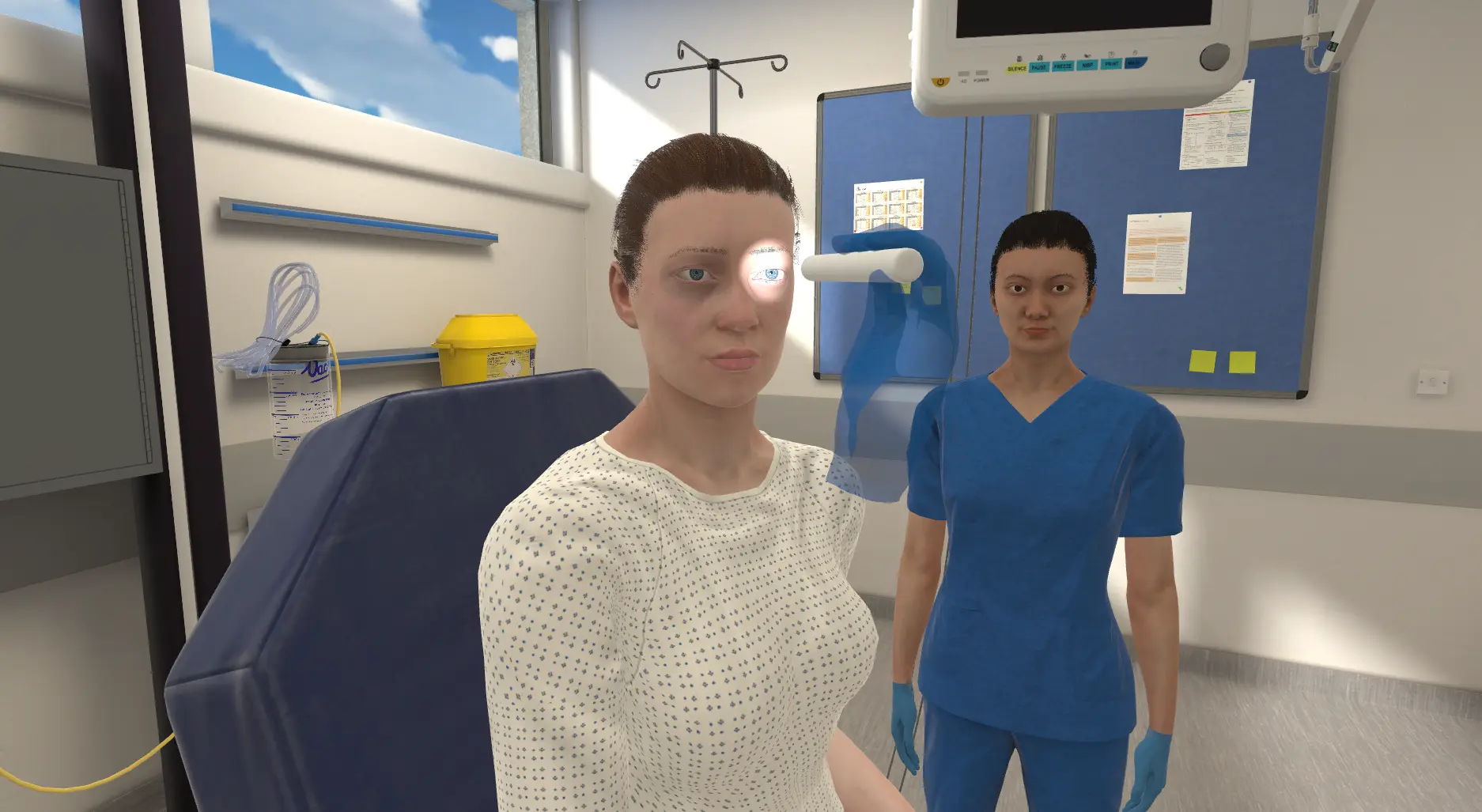
Dr. Taylor Edwards, Professor at Indiana University of Pennsylvania (IUP), is embedding dynamic technology into the classroom in a new way for students in a graduate level, healthcare informatics course.
As the nursing role and scope continues to evolve, emphasis has been placed on competency from both a clinical and technological perspective.
Nurses, administrators, and other allied health professionals are all expected to embed, leverage, and maintain digital records and equipment to elevate comprehensive and timely patient care.
In healthcare, data-driven decision-making is imperative in clinical judgment, and the importance of collecting, analyzing, and interpreting data is a need in modern healthcare leadership and education.
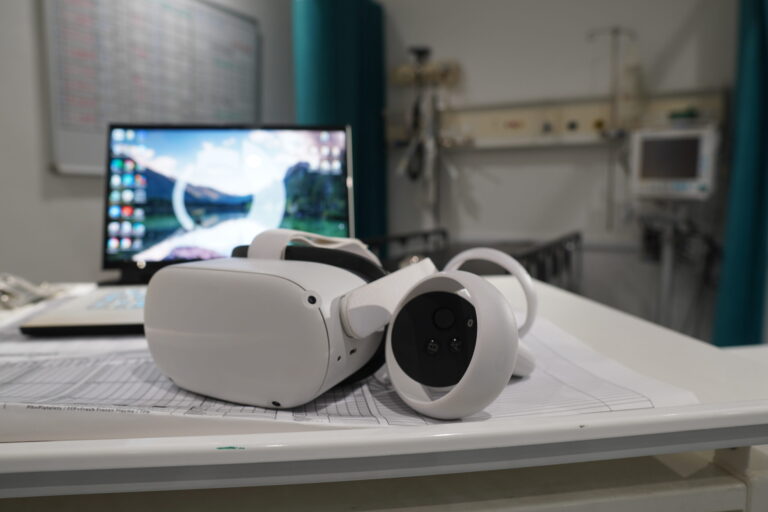
Across both undergraduate and graduate level nursing programs, immersive simulations powered by virtual reality (VR) are being used to empower student development and growth from early pre-licensure fundamentals to advanced level practice skills like delegation, prioritization, and decision-making.
In Dr. Edwards’ Healthcare Informatics course, since implementing VR, enrollment has grown from an elective of 20 students to about 50 students – an indicator of the rising demand for tools and courses on digital literacy and the integration of technology like VR and AI into nursing practice and other health professions.
Uniquely, the Healthcare Informatics course brings together undergraduate and graduate nursing students, many of whom are on a nurse educator and administration track, as well as undergraduate public health, medical imaging, exploratory students, graduate health services administration, human resources and employee relations.
Students in this course are working together to better understand the digital tools available today and how to best implement them to elevate learners, empower educators, and transform health outcomes.
Preparing Future Healthcare Leaders for a Digital Future
Healthcare informatics is a cross-listed course for both undergraduate and graduate students.
Students use this course to develop a deeper understanding of how dynamic technologies like AI-powered VR simulations can be successfully implemented to impact patient outcomes, safety, and empower the future of healthcare training.
To meet the objectives in this course, Dr. Edwards sought an engaging, safe, and scalable way to expose students to immersive clinical simulations, encouraging students to identify areas in practice where the use of digital tools could create significant impact for both healthcare professionals and patients.
Integrating OMS VR into a Graduate Informatics Course
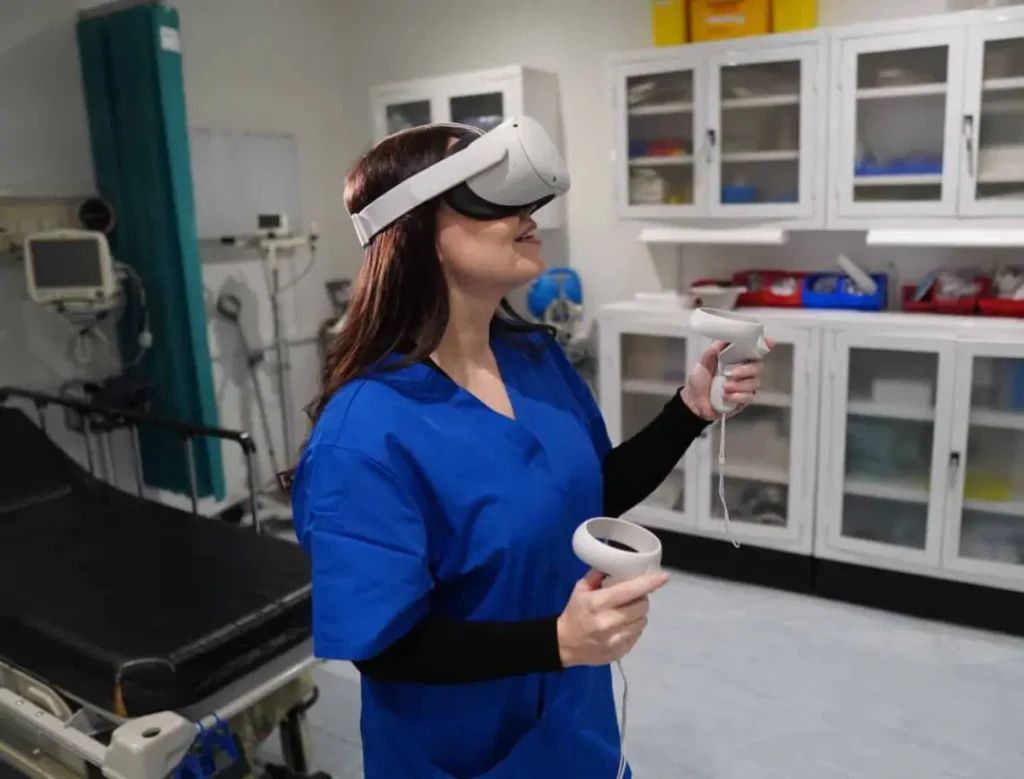
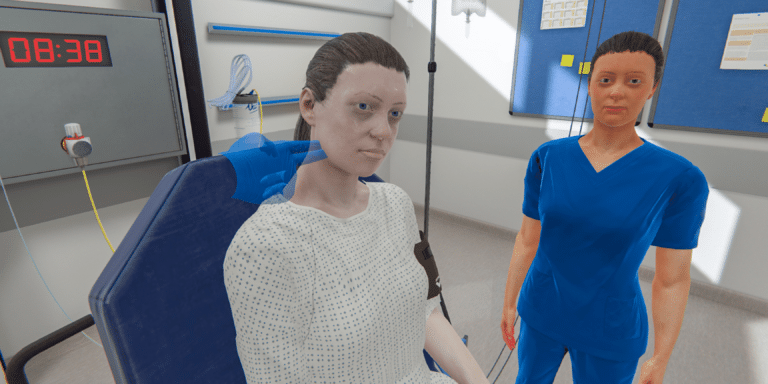
The graduate and undergraduate students in the Healthcare Informatics course are using OMS in multiple ways to empower their learning.
To begin, students are first oriented to the virtual environment and the OMS platform through the completion of a walk through tutorial.
Once students are comfortable in navigating the scenario environment, they independently complete an immersive scenario, caring for a patient with asthma.
Because many students in this course do not come from a nursing or clinical background, Dr. Edwards carefully selected scenarios that both exposed students to the nature and daily responsibilities of clinical care while also providing an avenue for non-clinical students to successfully navigate the scenario.
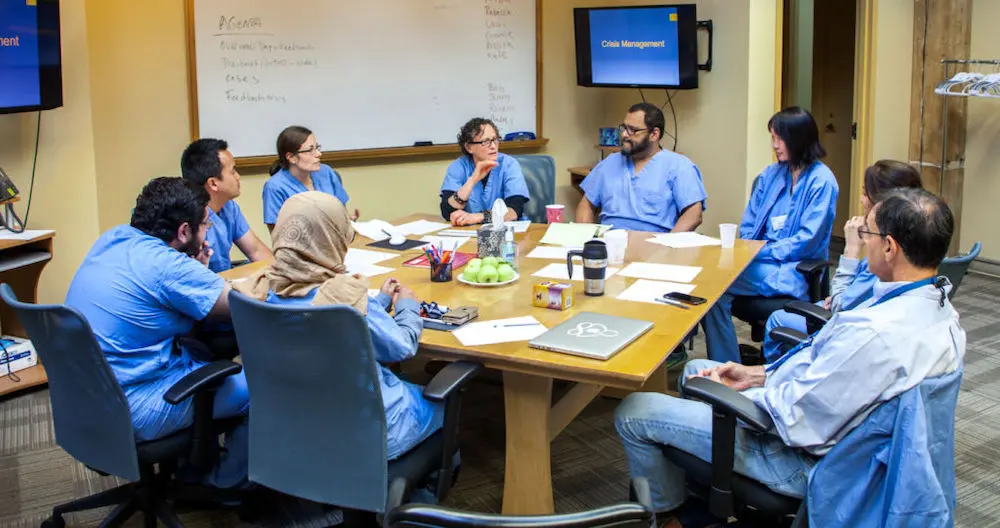
Emphasis was placed on the reflection and debriefing process following scenarios rather than on the clinical performance score itself.
Students reflected and debriefed on the experience of the simulation, discussing the larger benefits of immersive simulation and how dynamic technology might be applied in practice to empower learners and improve patient care.
This method allows students to gain pointed exposure to both clinical situations and technology, like AI-enabled virtual reality, while encouraging an environment of critical thinking, administration, and leadership, connecting core concepts and experiences in VR to applied, real-world problem-solving in hospital systems.
Building Digital Confidence and Critical Thinking
Dr. Edwards’ has found great success with the addition of virtual reality to her course and to the larger nursing curriculum, identifying increased student engagement and interest in advanced technologies, even among non-technical learners.
Use of OMS is empowering students to “better prepare for when these [scenarios] happen at the clinical site to improve patient outcomes.”
Students have also reported positive sentiment about their experiences using VR as a part of their coursework.
Virtual reality is a psychologically safe space for students to practice, which was echoed by students in their feedback of the platform.
Students reportedly valued VR as a safe space to practice, experiment, and reflect. Importantly, reflection provided another means for students to self-identify knowledge gaps, develop an understanding for clinical care, and critically think about the optimal implementation and use of digital tools to transform hospital systems and nurse training.
Not only are students gaining exposure to digital tools, they are also being challenged to identify big-picture ways in which technology can elevate hospital-wide initiatives, whether on quality and safety, onboarding and retention, or specific to patient care or procedures.
With the course growing from 20, now nearly doubled to 50 students, signaling the growing interest, need, and demand for continuing education on and exposure to the digital tools that nurses and nurse leaders are expected to understand and leverage in their daily practice.
Scaling Innovation with OMS Create and Advanced VR Scenarios
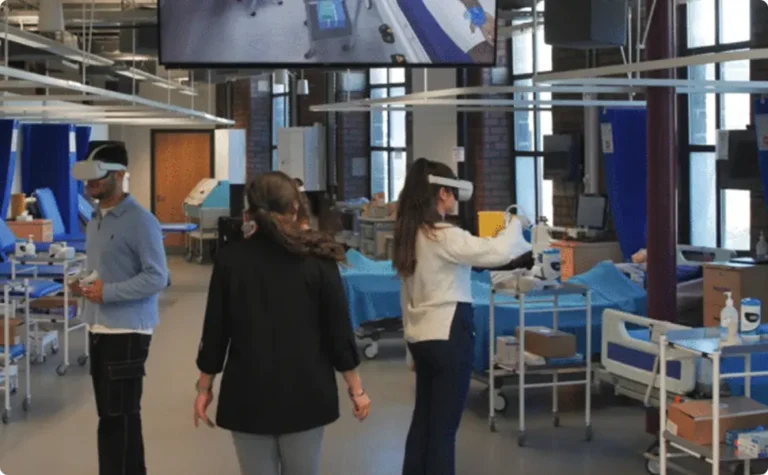
As the course continues to grow, so too does the use of virtual reality across IUP’s nursing curriculum.
Looking ahead to next steps, Dr. Edwards plans to integrate AI-powered OMS Communication scenarios to support skill development in therapeutic communication.
Additionally, Dr. Edwards and IUP are looking to develop institution-specific content aligned with course objectives and competencies using the no-code authoring platform, OMS Create.
Dr. Edwards and the team at IUP, including Dr. Johanna Boothby, Associate Professor and Simulation Lab Coordinator, continue to drive the adoption and innovation of dynamic technologies such as VR within the nursing curriculum, thoughtfully analyzing and identifying key areas where VR can elevate students in their professional development while supporting educators by saving them time and reducing administrative burden.
Dr. Edwards plans to “continue using VR in my simulations and integrate it as much as we can into the curriculum” in order to “maximize” its use for students and faculty across programs.
Shaping the Future of Healthcare Education
The adoption of virtual reality at IUP has led to significant success across both undergraduate and graduate level programs, with plans to continue expansion moving forward.
This unique use case leverages immersive simulations to expose students to clinical situations and the digital tools they’ll be using to solve known and unknown problems within a hospital system.
Dr. Edwards has developed a forward-thinking approach that’s driving digital literacy, leadership, and safety in nursing education.
To learn more about the use of virtual reality to transform course concepts or learning objectives, set up a time to talk with one of our experts to walk through your institution’s specific needs.
Ready to get real?
See how OMS can help your organization build confidence, competence, and clinical readiness for today’s healthcare.
