

Virtual reality in medical education
Turn classroom excellence into practice readiness.
OMS supports medical schools as they work with students to close the gap between theory and practice.
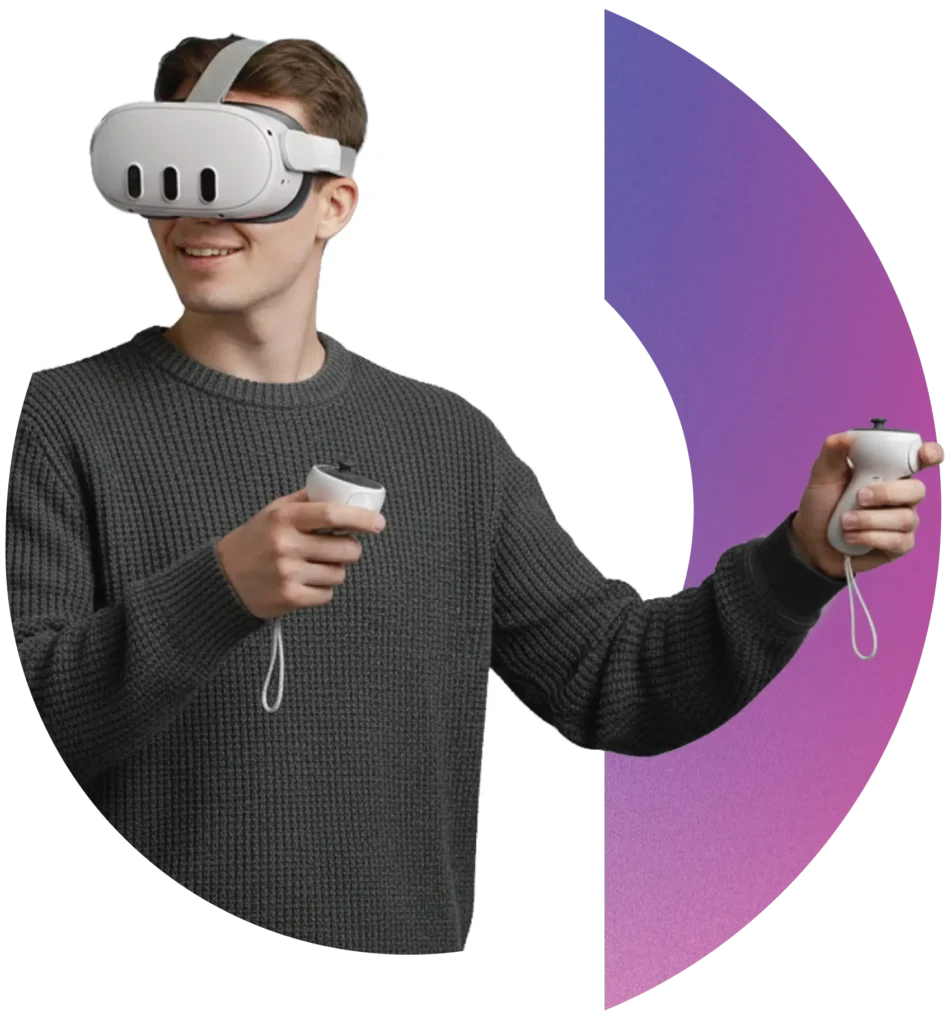
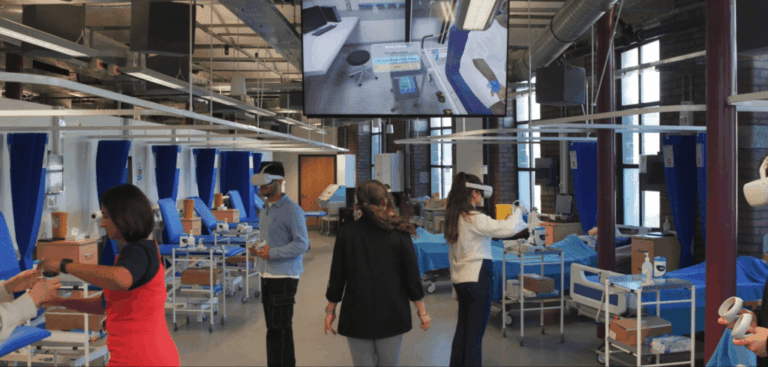
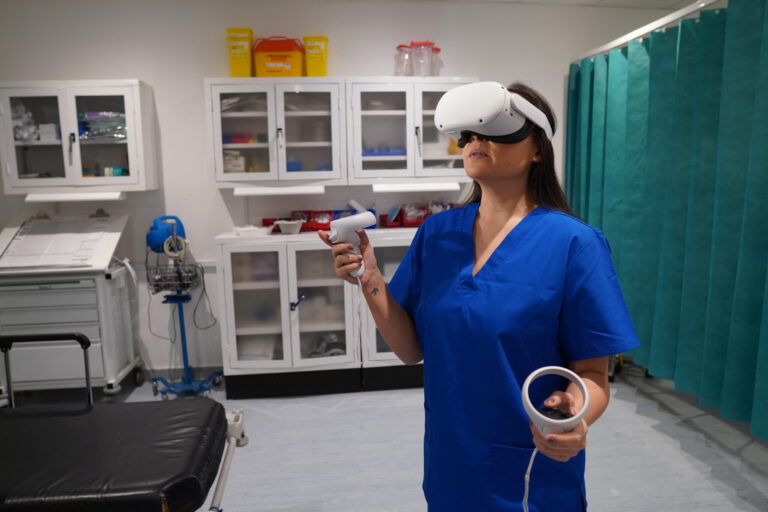
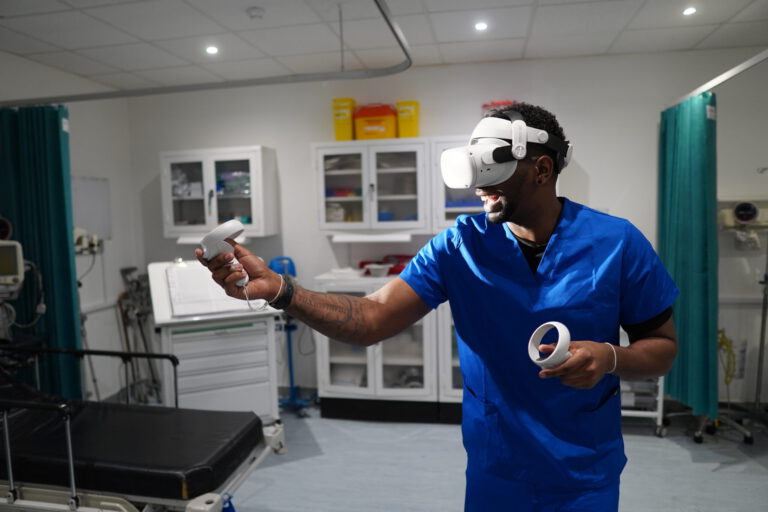
Our immersive simulations, available both in headsets and on screens, build clinical reasoning, decision making, and communication skills through realistic patient encounters that can be delivered anywhere, anytime and at scale.
Benefits
Stay ahead of the reality of medical education.
OMS extends the reach of traditional simulation. VR in medical education enables repeatable, flexible, and data-driven clinical experiences that complement existing teaching models. The result: psychologically safe, scalable, and equitable clinical preparation for every learner.
Standardize clinical experience
Deliver consistent, evidence-based clinical encounters across cohorts to reduce variability and ensure equitable learning opportunities.
Align to core standards
Map learning learning to medical education competency frameworks and accreditation expectations with structured, measurable clinical simulation.
Build real communication skills
Strengthen students’ patient- and caregiver-centered communication through realistic interactions that reflect real clinical complexity.
Strengthen readiness for practice
Build clinical judgment and confidence that drive readiness for graduation and residency.
Track clinical readiness across your medical program.
OMS provides real-time data on how learners think, decide, and perform in realistic clinical scenarios. Measure competency progress and track performance with consistent metrics that improve coaching, strengthen competency, identify gaps early, guide remediation, and ensure students are ready for real-world practice.
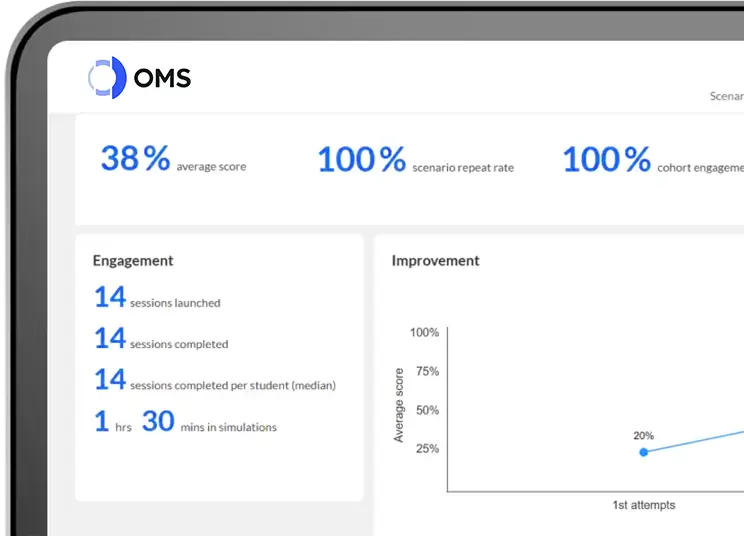
Real-WOrld ROI
Impact in action.
Who We Help
Build clinical readiness into your curriculum.
Medical Solutions
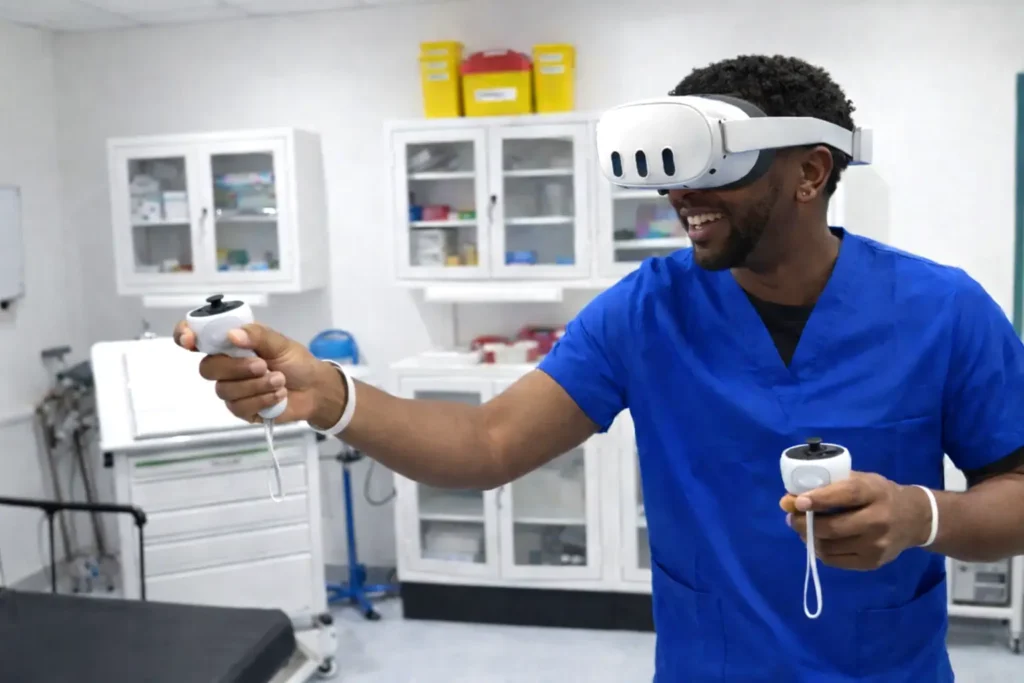
Immersive VR simulation for medical education
OMS immerses medical students in realistic clinical situations that mirror the demands of practice. From acute emergencies to chronic disease management, learners make diagnostic and treatment decisions, prioritize interventions, and experience the outcomes of their actions.
Foundations of Medical Science & Clinical Skills
OMS builds early clinical competence by immersing students in realistic patient encounters that reinforce biomedical science, clinical method, and fundamental communication skills. Learners develop confidence as they bridge the gap between pre-clinical study and real-world patient care.
Supports early history-taking and physical assessment skills
Reinforces anatomy, physiology, pathology and pharmacology concepts
Builds core communication and documentation habits
Strengthens early diagnostic reasoning and hypothesis generation
Bridges pre-clinical theory with clinical practice through applied scenarios
Systems-Based Clinical Medicine
OMS brings major body systems to life with immersive, case-based scenarios. Students apply pathophysiology, interpret symptoms, and make evidence-informed decisions across the full spectrum of common clinical presentations.
Covers respiratory, cardiovascular, neurological, endocrine, renal, and GI systems
Helps learners translate physiology and pathology into clinical patterns
Supports recognition of red flags and undifferentiated complaints
Reinforces clinical pharmacology and safe medication practice
Provides repeatable experiences to deepen system-level understanding
Clinical Rotations & Specialty Readiness
OMS prepares students for clerkship and clinical apprenticeship with realistic scenarios that mirror the complexity of Internal Medicine, Emergency Medicine, Surgery, Psychiatry, Pediatrics, Primary Care and Obstetrics & Gynecology. Learners practice communication, prioritization and clinical judgement in evolving patient encounters.
Readiness support for core rotations and specialty attachments
Exposure to presentations that may not be seen during real placements
Develops prioritization, organization and bedside communication skills
Reinforces interprofessional collaboration and escalation of care
Builds confidence in managing common and variable clinical scenarios
Acute, Emergency & Critical Care
OMS challenges learners with high-stakes, time-sensitive scenarios that demand rapid assessment and safe escalation. Students gain experience managing shock, sepsis, respiratory failure, and other acute presentations in a controlled, repeatable environment.
Acute scenarios including sepsis, shock, airway compromise, and neurologic decline
Promotes rapid assessment frameworks and structured decision making
Supports escalation and teamwork under pressure
Reinforces patient safety and early recognition of deterioration
Prepares learners for ED, acute medicine, and on-call environments
Clinical Decision Making, Professional Practice & Leadership
OMS develops the higher-level skills required for safe, independent practice. Learners strengthen diagnostic reasoning, communication, shared decision making and documentation while building the professionalism and teamwork expected in clinical environments.
Builds differential diagnosis, clinical reasoning, and judgment
Supports safe prescribing habits and medication decision making
Enhances communication, handover and shared decision making
Reinforces ethical, legal and patient-centered practice
Develops teamwork, leadership and preparedness for residency/FY1
Hear From Our Clients
“It’s particularly beneficial that candidates can engage with desktop scenarios repeatedly. This allows them to become familiar with medical terminology, procedures, and equipment that are new to them, all within environments that simulate the actual conditions they’ll face.”
Kimberly Workum
Director of the Clinical Competence Assessment Centre, University of Manitoba









Related Medical Education Resources

Ready to redefine readiness in your medical education program?
See how immersive VR can elevate your learners and prepare them for what’s next in practice.
