

Virtual Reality in Healthcare Education
From classroom knowledge to clinical readiness.
OMS helps physician assistant programs prepare students for the realities of patient care.
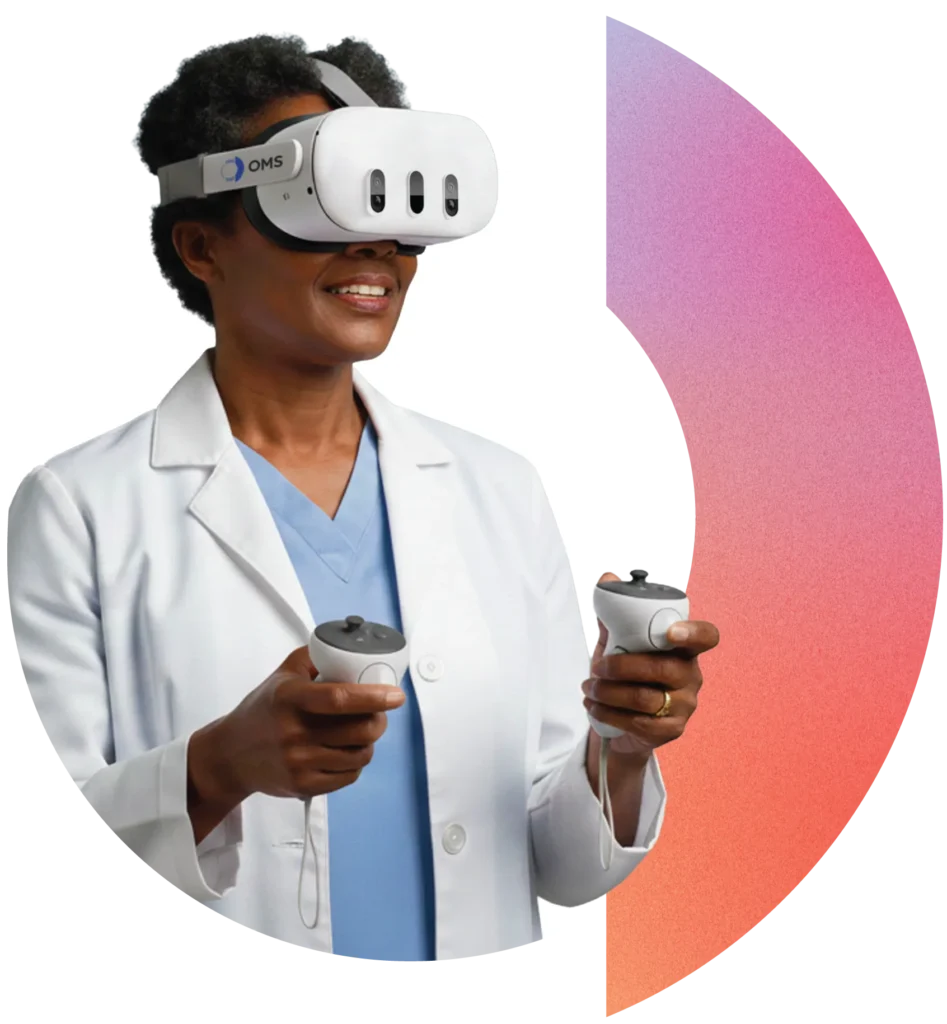
Our immersive virtual reality healthcare platform bridges the gap between didactic learning and clinical performance, giving every learner safe, realistic experience before they enter the field.
Benefits
Prepare students for the reality of PA practice.
PA programs face mounting pressure to prove graduates are practice-ready, clinically skilled, confident under pressure, and prepared to deliver safe, effective care. OMS makes that readiness visible and measurable. Our evidence-based VR simulations supplement classroom education, helping students develop communication and decision-making skills that matter most most in today’s healthcare settings.
Provide consistent clinical encounters
Deliver consistent clinical encounters across cohorts to reduce variation and strengthen preparation for rotations and entry into practice.
Align training with key standards
Connect simulation activities to PA competency expectations and accreditation needs with clear, measurable performance benchmarks.
Advance learner communication skills
Support learners as they strengthen patient-centered communication through virtual experiences that reflect the complexity of shared decision-making in real clinical practice.
Strengthen readiness for clinical rotations
Strengthen diagnostic thinking, clinical decision-making, and confidence to support readiness for graduation and clinical practice.
Prove outcomes with objective data
Provide objective data that supports outcomes reporting, accreditation requirements, and ongoing program improvement.
Scale experiential learning efficiently
Extend high-quality experiential learning without increasing faculty effort, all while maintaining consistency across learner
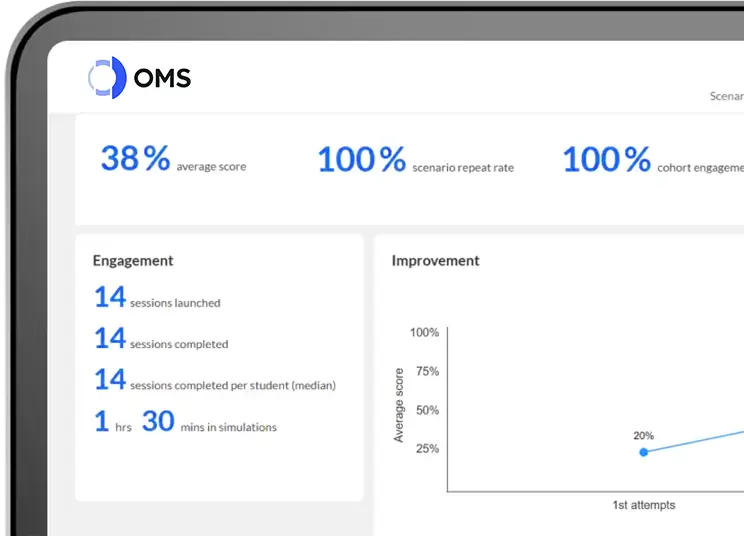
Measure and prove clinical readiness.
The OMS platform allows faculty to measure and evaluate performance across cases, cohorts, and competencies. Assess skills over time and track progression with objective measures that guide feedback, provide targeted learner support, and turn readiness into a trackable outcome.
Real-WOrld ROI
Impact in action.
Who We Help
Build clinical readiness into your curriculum.
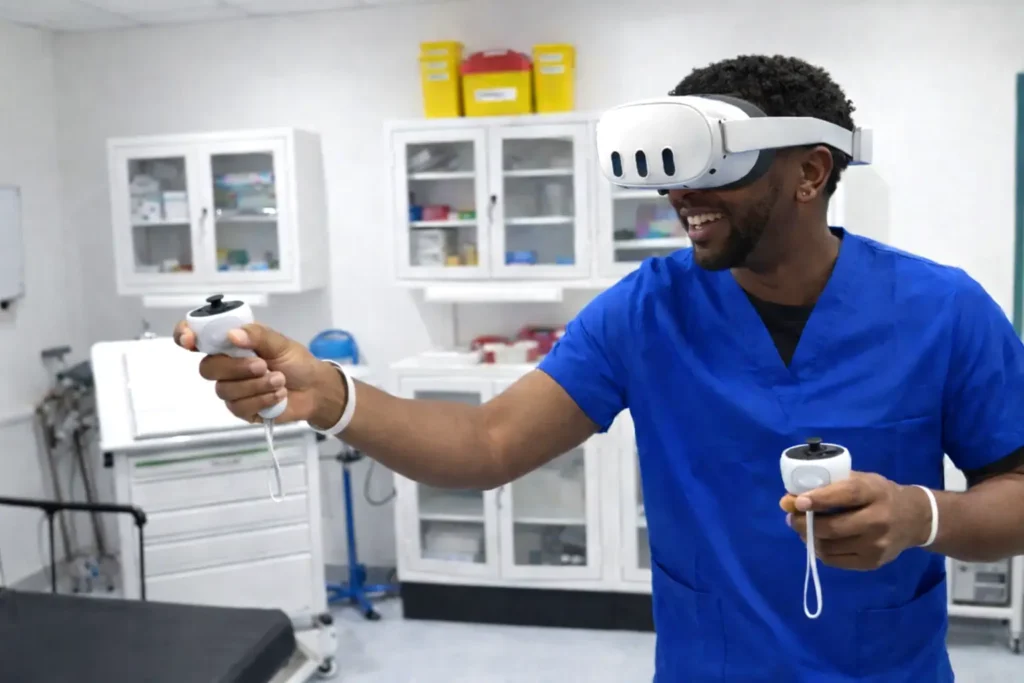
Real-world simulations
Immersive simulation for PA education.
OMS immerses PA students in realistic clinical challenges they will face in rotations and practice, from acute emergencies to chronic management and preventive care. Learners assess patients, make critical decisions, and build confidence, judgment, and adaptability through deliberate, data-driven practice.
Foundations of Medical Knowledge & Clinical Method
OMS supports the early phases of PA education by immersing learners in realistic clinical encounters that reinforce core biomedical concepts and essential clinical skills. Students develop confidence in history-taking, physical assessment, and early diagnostic reasoning as they transition from classroom learning to patient care.
Reinforces anatomy, physiology, pathology, and microbiology fundamentals
Builds core communication and documentation habits
Strengthens early diagnostic reasoning and hypothesis generation
Bridges pre-clinical theory with clinical practice through applied scenarios
Systems-Based Clinical Medicine
OMS brings major body systems to life with immersive, case-based scenarios. Students apply pathophysiology, interpret symptoms, and make evidence-informed decisions across the full spectrum of common clinical presentations.
Covers respiratory, cardiovascular, neurological, endocrine, renal, and GI systems
Reinforces clinical pharmacology and safe medication practice
Supports evaluation of undifferentiated complaints
Strengthens recognition of red flags and high-risk conditions
Provides repeated practice in system-based clinical decision making
Clinical Year Preparation & Specialty Readiness
OMS prepares PA students for their clinical rotations with realistic scenarios reflecting Internal Medicine, Emergency Medicine, Family Medicine, Surgery, Paediatrics, Psychiatry, and Women’s Health. Learners practice communication, prioritisation and clinical judgment essential for success during the clinical year.
Readiness support for all core PA rotation
Exposure to cases learners may not encounter during placement
Builds confidence in decision making and patient management
Strengthens communication, handover, and clinical organization skills
Reinforces collaboration and appropriate escalation of care
Acute, Emergency & Urgent Care
OMS challenges PA learners with time-sensitive scenarios requiring rapid assessment and safe intervention. Students gain experience managing high-acuity presentations in a repeatable, controlled environment that enhances readiness for emergency and urgent care rotations.
Practice with acute conditions such as sepsis, shock, respiratory failure and trauma basics
Reinforces rapid assessment frameworks and urgent decision making
Builds confidence in escalation and teamwork skills
Supports safe management of clinical uncertainty
Prepares learners for high-pressure rotation environments
Clinical Decision Making, Professional Practice & Interprofessional Care
OMS develops the higher-level competencies required for PA practice, including diagnostic reasoning, patient communication, documentation, and ethical decision making. Learners engage with evolving clinical scenarios that strengthen their clinical judgement and professional readiness.
Develops differential diagnosis and advanced clinical reasoning
Reinforces safe prescribing considerations and medication decisions
Enhances communication, patient education and shared decision making
Supports ethical, legal, and patient-centered practice
Strengthens teamwork, collaboration, and preparedness for real-world PA role







Related PA Resources
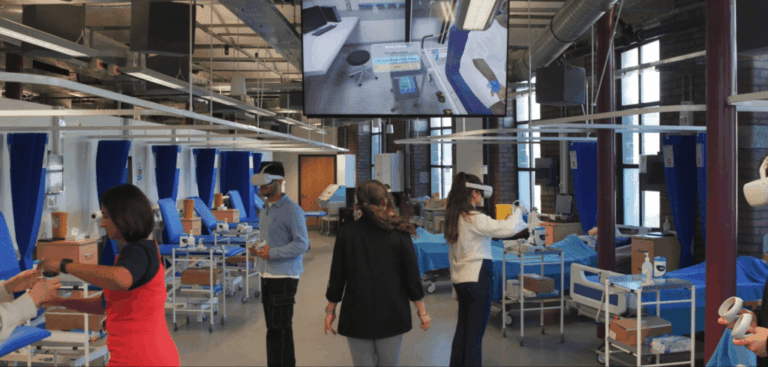
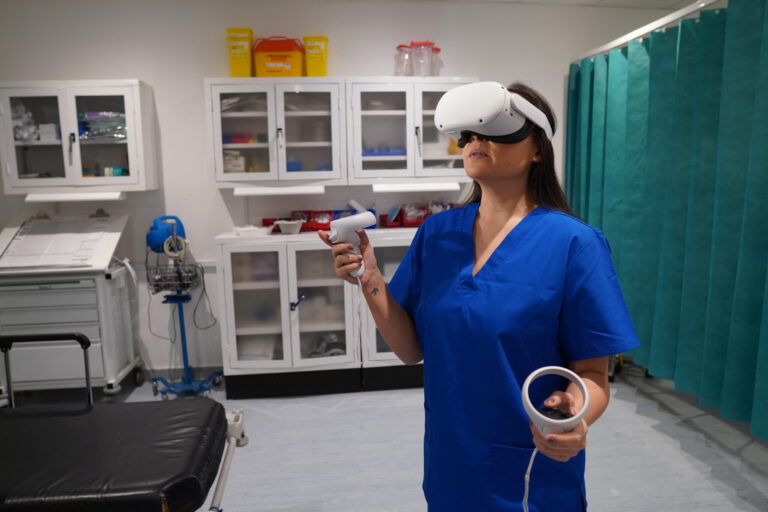
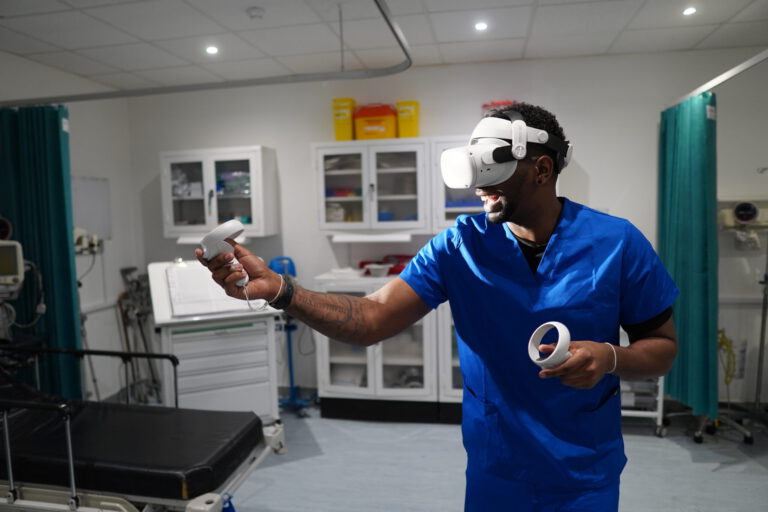

Ready to redefine readiness in your PA program?
See how immersive VR can elevate your learners and prepare them for what’s next in practice.
