

July 2, 2026
post
Transforming Diabetes Education with VR Simulation
A peer-reviewed pilot study across two NHS trusts found VR simulation improved junior doctors’ confidence in managing diabetes emergencies, with effects extending well beyond the training room.
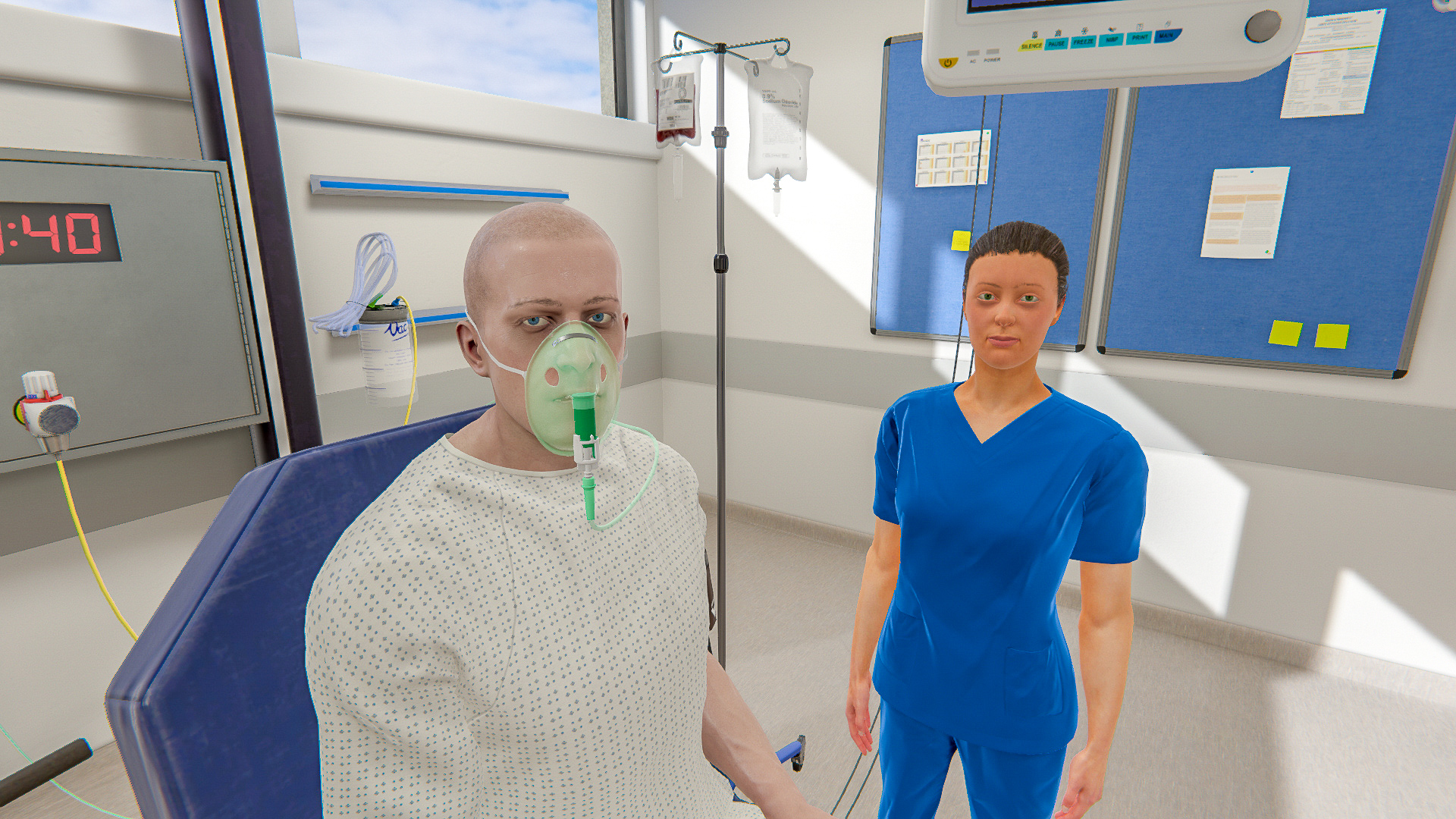
Clinicians in hospital settings must make rapid, real-time clinical decisions that directly affect patient outcomes; strengthening confidence and readiness for emergencies can make all the difference.
When the Diabetes Team at NHS England saw concerning statistics on clinician and patient confidence in managing diabetes-related emergencies in hospitals, they looked for ways to enhance training for junior and non-specialist doctors in managing emergencies in type 1 diabetes.
Medical Diabetes Training Using VR – The DEVICE Study
Published in the Journal of Diabetes Science and Technology, the study addressed a familiar challenge for many UK healthcare institutions: high staff turnover and a limited pool of specialist diabetes clinicians make it difficult to consistently prepare junior and non-specialist doctors for diabetes-related emergencies.
Patients with type 1 diabetes also raised concerns about how confident and well-prepared hospital staff are, particularly during emergency admissions.
The pilot, DEVICE (Diabetes Emergencies: Virtual Interactive Clinical Education), ran across two sites: University Hospital Southampton and Queen Alexandra Hospital, Portsmouth. It included 39 junior doctors, including foundation doctors (FY1, FY2, FY3), core medical trainees, and doctors in training in Internal Medicine, Acute Care, and Advanced Clinical Practitioners.
Each participant completed four immersive clinical simulations: two on hyperglycaemia and two on hypoglycaemia. Scenarios were created in collaboration with OMS (Oxford Medical Simulation) and the clinical project team. The team included Diabetologists, an Emergency Medicine consultant, and a person with type 1 diabetes.
Learners navigated each scenario and treated their virtual patient as they would in real-world practice. They completed assessments, formulated clinical management plans, and implemented treatment decisions. They then monitored and adjusted based on the patient’s physiological response to their intervention(s).
Real Impact – The Findings
The study aimed to identify whether these scenarios could affect confidence and clinical competencies in managing diabetes emergencies, and the results were consistent across experience and behavioural measures:
- 100% of participants rated the scenarios suitable for their level of practice
- 100% stated the VR scenarios would improve their daily clinical practice
- 72% expected to apply what they had learned within a week; 100% within three months
- Mean trainee confidence in managing DKA (8-point Likert scale) rose from 3.92 to 5.41 – a statistically significant 28% increase
Those results held at three-month follow up:
- 89% of trainees reported using the knowledge learned from their VR training in their daily practice
- 75% had shared their diabetes learnings with others
- 96% found that the VR scenarios were better for knowledge retention than “standard” eLearning modules
- 96% would use the VR format again for clinical learning
Notably, the study demonstrated Kirkpatrick Level 3 outcomes. This indicates retention beyond knowledge gain, and bridges the gap to practice through behavioural change. Participants’ self-reports also supported continued use of knowledge gained from VR experiences in daily practice at three-month follow-up. As one participant stated:
“Honestly, this was the single most useful learning experience I’ve had so far in my medical training.”
What This Means for UK Healthcare Education Today
The pressures that motivated this study have not eased. Workforce turnover, limited access to specialist trainers, and the ongoing need to prepare junior doctors for high-acuity, low-frequency presentations remain central challenges for institutions working within the NHS Long Term Workforce Plan.
VR-based simulation offers a way to standardise training quality across sites without placing additional demand on specialist clinicians’ time.
The OMS platform used in this pilot has expanded considerably since the study was conducted, now supporting immersive scenarios with AI-enabled communication and expanded environments across the continuum of care.
The evidence from this study remains directly relevant to any institution weighing how to deliver consistent, high-quality emergency training at scale.
If your institution is exploring how immersive simulation could support training for high-acuity clinical presentations, get in touch to discuss what this evidence base could mean for your programme.
Source: Mallik R, Patel M, Atkinson B, Kar P. Exploring the Role of Virtual Reality to Support Clinical Diabetes Training–A Pilot Study. Journal of Diabetes Science and Technology. 2022;16(4):844–851.
Related



Ready to get real?
See how OMS can help your organization build confidence, competence, and clinical readiness for today’s healthcare.

