

July 22, 2026
post
The Focus on Mental Health Care: CU Anschutz and the Tools of Engagement Program
How CU Anschutz is preparing future nurses to confidently care for patients with mental health needs across the continuum of care.
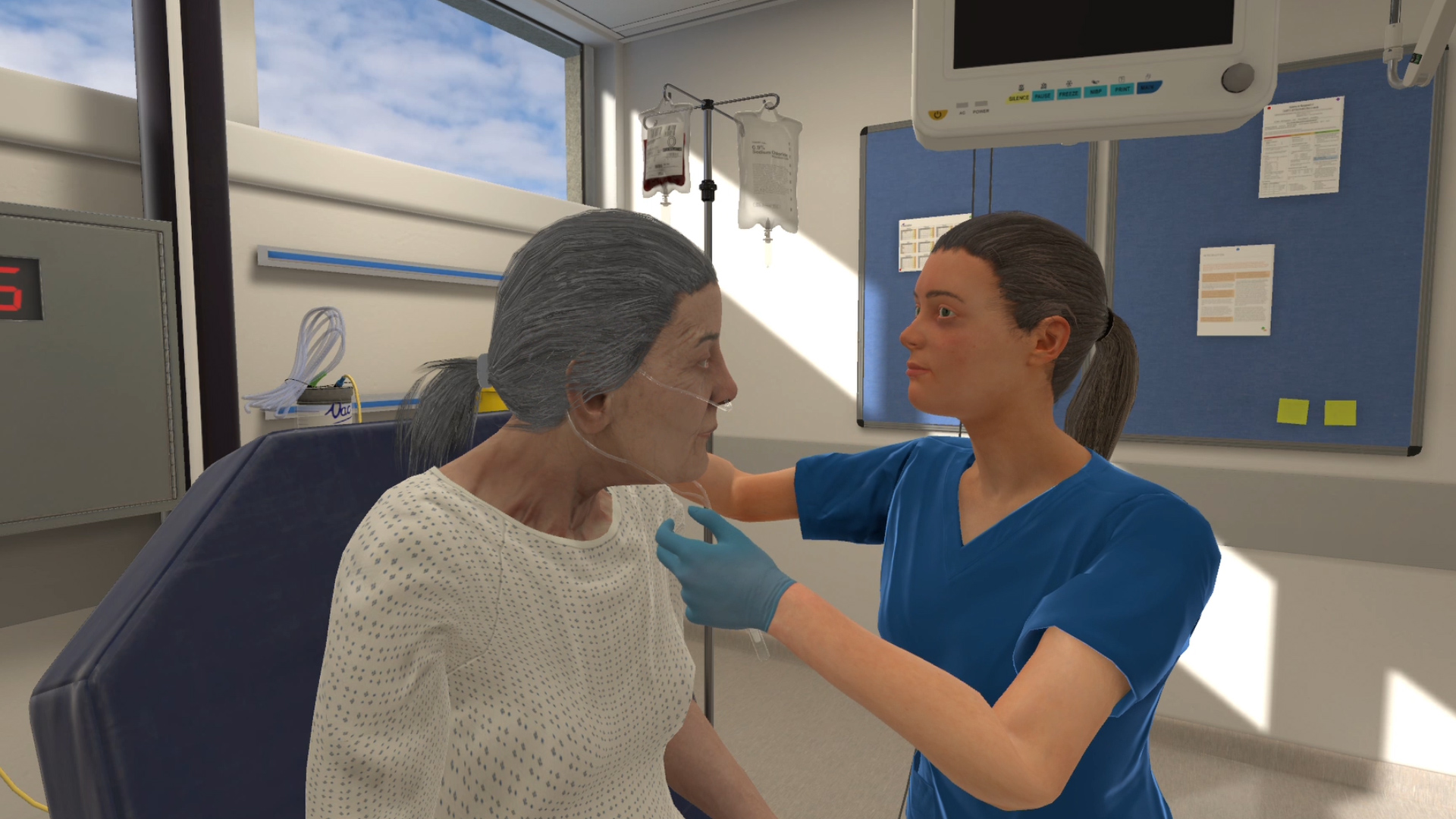
During the COVID-19 pandemic, nursing educators faced an urgent challenge: how to continue preparing students for clinical practice when traditional placements and in-person simulation were limited.
What began as an initial trial of virtual reality simulation between OMS (Oxford Medical Simulation) and CU Anschutz School of Nursing evolved into a multi-year partnership, resulting in the co-creation and development of bespoke scenarios aligned to curriculum and learner needs.
The result is more than a technology implementation; it’s a model for how academic institutions and industry partners can work together to deliver measurable impact and advance the future of healthcare education. Clinicians in hospital settings must make rapid, real-time clinical decisions that directly affect patient outcomes; strengthening confidence and readiness for emergencies can make all the difference.
CU Anschutz partners with OMS
Nursing educators at CU Anschutz first began looking into virtual reality simulation during the pandemic to meet the ongoing need for meaningful clinical experiences for their students during a time when in-person simulation was not just limited – in many cases, it was paused entirely.
Initially a trial phase, educators at CU Anschutz quickly integrated OMS across their nursing program and into three of their Advanced Practice tracks – Clinical Nurse Specialist, Family NP, and Acute Care NP.
Learners from all three tracks debriefed together, intraprofessionally, resulting in rich discussions from shared experiences and differing perspectives depending on role, priorities, and previous clinical experiences.
With continued success, CU Anschutz looked to expand their partnership with OMS as they began development for another program – Tools of Engagement: Mental Health, Communication, and Longevity in Nursing.
The Challenge
Through close connection and communication with their clinical partner, UCHealth, educators were made aware of the issues facing bedside nurses – difficulty in both managing their own mental health and caring for mental health across clinical settings, not just in mental health specialty care units.
“Through our strong clinical partnership with UCHealth on the Anschutz Medical Campus, a need was identified to better prepare bedside nurses for the stresses of complex healthcare environments. This includes supporting nurses in managing their own mental health, as well as providing care for patients with mental health needs in the clinical setting.”
Dr. Fara Bowler, DNP, APRN, CHSE-A, is the Associate Professor and Assistant Dean of Clinical Simulation Science, as well as the Senior Director of Clinical Partnerships and Placements at CU Anschutz School of Nursing.
CU Anschutz Nursing was keen to investigate and address this identified need for preparing future nurses to be both competent and confident in managing care for patients, as well as themselves.
To address this, Dr. Bowler and the psychiatric-mental health nurse practitioner team at CU Nursing developed the Tools of Engagement – a series of co-curricular modules and learning activities designed for nursing students to build knowledge and skills into their practice, particularly around mental health and to increase professional resilience.
Part of this development called for the creation of custom mental health scenarios, and the team at OMS became the technology partner for this large-scale curricular initiative.
VR Simulation Co-Development: Tools of Engagement
Program Structure
Faculty with expertise in mental health led the development of a five-module curriculum, combining both didactic content with experiential learning in the form of VR simulation.
The five core modules were developed first and included:
- Resiliency and Self Care
- Mental Health Responder Training
- Integrated Behavioral Health
- Therapeutic Communication
- Incivility & Violence Prevention
These modules addressed the theory and application of core communication and clinical skills needed to confidently and competently intervene across the continuum of care.
While some of the modules utilized pre-existing OMS scenarios, such as Substance Use Disorder Conversations or Anxiety, educators at CU Nursing needed more bespoke content to align with their exact needs.
Collaborative Scenario Development
Scenarios were first defined and co-developed with CU Nursing experts Paul Cook, PhD,, Professor and Chair of the Behavioral, Family, & Population Health Division, and Kerry Peterson, PhD, DNP, PMHCNS-BC, PMHNP-BC, FAANP, Associate Professor of Clinical Teaching and the Director of the Psychiatric Mental Health Nurse Practitioner Program.
Dr. Cook and Dr. Peterson collaborated directly with OMS, including Clinical Authors and the Technical Development team, as subject matter experts for the development. Dr. Bowler contributed as the simulation subject matter expert, ensuring high-quality integration of simulation into the existing systems.
Through regular meetings and stakeholder perspectives, the scenario development process was iterative, defining the needs of the scenario and expected learner outcomes, and building the environment in which these scenarios would take place.
Two specific scenarios were identified as part of the collaborative development process – Therapeutic Communication led by Dr. Paul Cook and Violence Prevention led by Dr. Kerry Peterson.
Each scenario consisted of unique elements needed to immerse the learner in the scenario in a realistic environment reflective of the clinical world.
Therapeutic Communication was built with the ability for learners to actually talk with their virtual patients, making it one of OMS’ first voice-controlled scenarios. Learners in this scenario talk with a patient and use motivational interviewing techniques to forge the therapeutic relationship and address difficult conversations for optimal patient care.
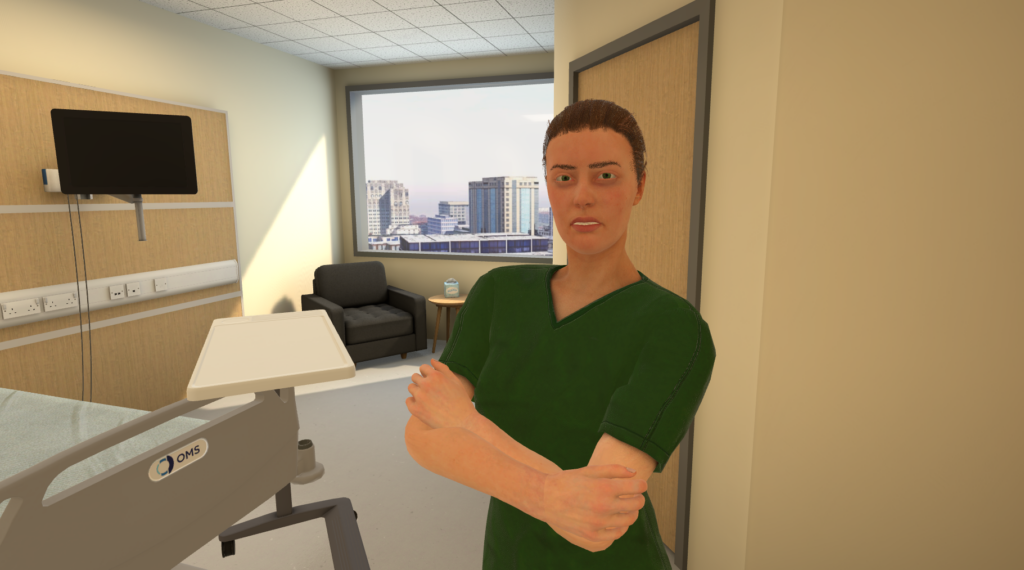
Incivility and Violence Prevention also utilizes voice control technology, placing learners in a room with a frustrated relative – a situation in which they must use their communication skills to de-escalate, provide reassurance, and address family questions and concerns.
These scenarios were developed and are a core piece of the Tools of Engagement program, showing great success thus far, reaching over 800 students per semester – it has already been integrated across undergraduate and graduate nursing programs.
Measured Impact & Results
Results by Module
Dr. Fara Bowler and the team at CU Nursing collected and analyzed data from the implementation of this program to evaluate its performance and identify future implications.
After completing the Therapeutic Communication module, learners demonstrated statistically significant gains in all areas tested. This included communicating with patients, peers, and colleagues, using open-ended questions or reflective listening techniques, expressing empathy, and conflict resolution.
Following this module, learners demonstrated less personal stress overall, reducing extreme stress such as burnout, alluding to the growing resiliency in managing stressful situations across the continuum of care from participation in this program.
The Violence Prevention module also showed statistically significant gains across areas such as understanding violence prevention strategies, applying de-escalation principles and techniques, and contributing to a culture of safety. Although this module was not designed to directly coach students about improving their own mental health, students also had lower scores on one of three stress measures after learning violence prevention and de-escalation techniques.
Learner insights
Participants in this program provided their feedback on usefulness and knowledge gained throughout the process.
Particularly for co-developed scenarios, 95% of learners reported that the Therapeutic Communication scenario was useful in preparing for real-life conversations. 99% found the content appropriate for Violence Prevention in preparing to de-escalate difficult patient encounters.
Interestingly, Dr. Bowler noted that “The intent of the module wasn’t to decrease stress, however, it did by increased confidence in the development of the skills needed to handle difficult conversations. Students said that having the skills helped to decrease their burnout and their stress.”
Partnership Impact Beyond CU Anschutz
What began as a trial for VR clinical simulations evolved into a partnership resulting in co-developed scenarios which are now available in the OMS library for other nursing schools with interest in these areas of focus.
While the program and collaboration with OMS has grown, Dr. Fara Bowler and the team at CU Nursing have plans to expand even further, transitioning from screen-based to in-headset simulation as the next phase in their VR simulation program.
Building scenarios from the ground up is no small feat, but with the right team in place, CU Anschutz has modeled the academic-industry partnership in the co-creation of evidence-based simulation that can reach learners at scale.
If your institution is exploring how immersive simulation could support bespoke partnerships, get in touch to schedule a time to speak with an Educational Specialist.



Ready to get real?
See how OMS can help your organization build confidence, competence, and clinical readiness for today’s healthcare.

